
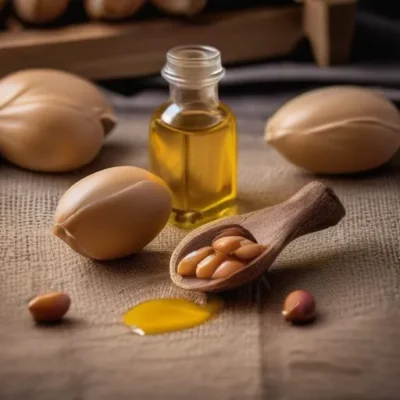
Culinary Argan Oil: 20 Ways to Enrich Your Recipes
Culinary argan oil distills an entire terroir into a few drops: Souss argan groves, Berber know-how, slow roasting of kernels. Its toasted hazelnut aroma and silky texture turn an ordinary dish into an authentic Moroccan experience. Far more than an olive oil alternative, it is a finishing condiment that elevates salads, tagines, pastries, and breakfasts. Here are twenty concrete uses — from the most traditional to the most creative — to make the most of cold-pressed oil.
Quick answer: Reserve culinary argan oil for cold uses or finishing: dressings, couscous, soups, fish, amlou toasts. Avoid high-temperature frying. One to two tablespoons are enough for four people — the aroma is intense.
Key takeaways
- Profile: toasted hazelnut, warm — incomparable with olive oil.
- Ideal use: finishing, gentle marinades, baking; never for intense frying.
- Quality: amber color, hazelnut scent, Souss origin, cold-pressed.
- Storage: cool pantry, tightly closed bottle, away from light.
From the Argan Tree to Your Plate
Culinary oil comes from kernels roasted before cold pressing — a step that gives it its characteristic aroma. Women in Souss cooperatives perpetuate a millennia-old craft: manual harvest, patient shelling, grinding on a millstone. The result concentrates vitamin E, antioxidants, and unsaturated fatty acids (omega-6 and omega-9).
To understand the full supply chain, read the argan journey from tree to your table and our criteria for pure and authentic argan oil.
| Oil type | Kernels | Main use | Flavor |
|---|---|---|---|
| Culinary | Roasted before pressing | Cooking, amlou, finishing | Toasted hazelnut, warm |
| Cosmetic | Not roasted | Skin, hair, care | Neutral, no food aroma |
20 Ideas to Elevate Your Cooking
Grouped by use, these twenty applications cover everyday meals, celebrations, and gourmet experiments. Adjust quantities to your palate: argan should be used sparingly.
| No. | Use | Practical tip |
|---|---|---|
| 1 | Argan-lemon dressing | Two tbsp, lemon juice, cumin — on beets or grated carrots |
| 2 | Fragrant marinades | Meat, fish, or vegetables 1–2 h chilled before gentle cooking |
| 3 | Tagine finishing | A drizzle at the end of cooking to reveal the spices |
| 4 | Royal couscous | Generously drizzle before serving, with vegetables and chickpeas |
| 5 | Roasted vegetables | Brush carrots, zucchini, or sweet potatoes before the oven |
| 6 | Cold sauces | Homemade mayonnaise, dips, cold pasta sauce |
| 7 | Bread dip | Bowl of pure oil with fresh bread, focaccia, or msemen |
| 8 | Amlou base | Bind with roasted almonds and honey — see artisanal amlou |
| 9 | Oriental pastries | Muffins, cookies, almond cakes — partially replaces butter |
| 10 | Moroccan breakfast | Drizzle on toasted bread with honey or amlou |
| No. | Use | Practical tip |
|---|---|---|
| 11 | Vitamin smoothies | One tsp in a banana-almond blend for a creamy texture |
| 12 | Grilled seafood | Drizzle shrimp or sea bream after cooking, with fresh parsley |
| 13 | Poached fish | Final touch on a light dish with preserved lemon |
| 14 | Roasted poultry | Brush before low-temperature cooking (160–180 °C) |
| 15 | Soups and veloutés | A few drops at serving — squash, red lentils, carrot |
| 16 | Fruit salads | Drizzle on figs, Medjool dates, or blood oranges |
| 17 | Savory or sweet verrines | Finishing layer to surprise your guests |
| 18 | Fresh cheeses | Pairs with goat cheese, feta, or labneh with honey and nuts |
| 19 | Breads and focaccias | Mix into the dough or drizzle when out of the oven |
| 20 | Homemade infused oils | Infuse with thyme, rosemary, or mild chili for 48 h |
Three express recipes to try this week
- Squash velouté: add a drizzle of argan at serving, with toasted sesame seeds and a pinch of cinnamon.
- Morning amlou toast: grilled whole-grain bread, a spoonful of amlou, and a drizzle of argan oil to intensify the hazelnut notes.
- Sweet-savory quinoa salad: warm quinoa, figs, almonds, argan drizzle and lemon juice — a complete plate in ten minutes.
Can you heat culinary argan oil?
Avoid very high temperatures: roasting the kernels creates a fragile aromatic base. Prefer adding at the end of cooking or at serving to preserve flavor and antioxidants. For frying, choose beldi olive oil or a neutral oil. For gentle cooking (roasted vegetables, poultry), moderate brushing remains acceptable.
Choosing, Storing, and Dosage
Choose oil from traditional production: amber color, hazelnut scent, clearly indicated Souss origin. Beware of unusually cheap products with no traceability. Once opened, store away from light and heat — it keeps for several months without losing its qualities.
| Purchase criterion | Good sign | Warning sign |
|---|---|---|
| Color | Golden amber, slightly cloudy | Too pale or colorless |
| Scent | Roasted hazelnut, warm | Neutral, rancid, or chemical |
| Label | “Culinary,” Morocco origin, cold-pressed | No mention of culinary use |
| Price | Reflects rarity and artisanal work | Abnormally low, no identified producer |
To explore uses in Moroccan cooking, see our culinary secrets of beldi olive and argan oils, and our selection of 7 surprising recipes beyond salad.
Frequently asked questions
- What is the difference between cosmetic and culinary argan oil? Culinary oil comes from roasted kernels (hazelnut flavor); cosmetic oil from non-roasted kernels. Do not confuse them when buying.
- How much for a salad? One to two tablespoons are enough for four people — the aroma is intense.
- Is argan oil part of amlou? Yes, it is one of the three traditional ingredients with roasted almonds and honey. Discover the benefits of amlou.
- Can you mix argan and olive oil? Yes: a 50/50 blend works for dressings and marinades, to balance the hazelnut intensity.
- Where to buy reliable culinary argan oil? Fine food shops, Moroccan cooperatives, or an online store specializing in Souss products.
Culinary argan oil is more than a condiment: it is an invitation to healthy, authentic, and flavorful Mediterranean cooking. Whether to elevate a savory dish, enrich a pastry, or accompany your morning bread, it turns every meal into a feast of flavors.
Discover our oils and Moroccan specialties
Explore our selection of delicatessen and Moroccan specialties: culinary argan oil, artisanal amlou, and Souss treats.