From Morocco to Japan: iconic trees that shape cultures
From the Mediterranean olive to the Japanese cherry, via the African baobab and Morocco’s argan tree: some plants go beyond greenery to become national symbols, economic pillars, and witnesses to human history. This journey explores their cultural meaning, and how they feed identities, traditions, and world heritage
Quick answer: The olive stands for peace, the baobab for resilience, the cedar of Lebanon for national identity, the sakura for Japan’s fleeting beauty, and the argan tree for Moroccan sustainability. Several enjoy international recognition (UN, UNESCO) underscoring ecological and cultural value
Key takeaways
- Olive: peace, longevity, World Day on 26 November
- Baobab: tree of life, traditional medicine, community life
- Cedar of Lebanon: national emblem, strength, nobility
- Sakura: fleeting beauty, hanami, symbol of Japan
- Argan tree: sustainability, women’s cooperatives, International Day on 10 May
Guardians of the Mediterranean and Africa
The olive: a universal peace symbol
Majestic and ancient, the olive is a strong emblem of the Mediterranean. Its branches were offered as reconciliation tokens since antiquity. UNESCO backs World Olive Tree Day on 26 November. Its oil anchors the Mediterranean diet and has shaped cuisines for millennia, in Morocco as in Spain, Italy, or Greece
The baobab: Africa’s tree of life
With its imposing silhouette, the baobab signals strength and resilience. Leaves, fruit, and bark support traditional medicine; its shade hosts community life in many African villages. Some centuries-old specimens became tourist landmarks and symbols of cultural continuity
The cedar of Lebanon: proud national emblem
On Lebanon’s flag, the cedar stands for strength and nobility. Used since antiquity for temples and ships, it embodies a global historical heritage. Protection and replanting programmes have run for decades
| Tree | Region | Symbolism | Recognition |
|---|---|---|---|
| Olive | Mediterranean | Peace, longevity, civilization | UN World Day, 26 Nov |
| Baobab | Africa | Resilience, medicine, community | Intangible heritage (selected sites) |
| Cedar of Lebanon | Lebanon | Strength, national identity | Official national emblem |
Between fleeting bloom and singular sustainability
Sakura: Japan’s fleeting beauty
The Japanese cherry (sakura) is one of the country’s most recognizable symbols. Spring blossom draws millions to hanami, flower-viewing gatherings that celebrate life’s transient beauty. That aesthetic of the ephemeral echoes the Japanese notion of mono no aware, sensitivity to impermanence
The argan tree: a Moroccan sustainability treasure
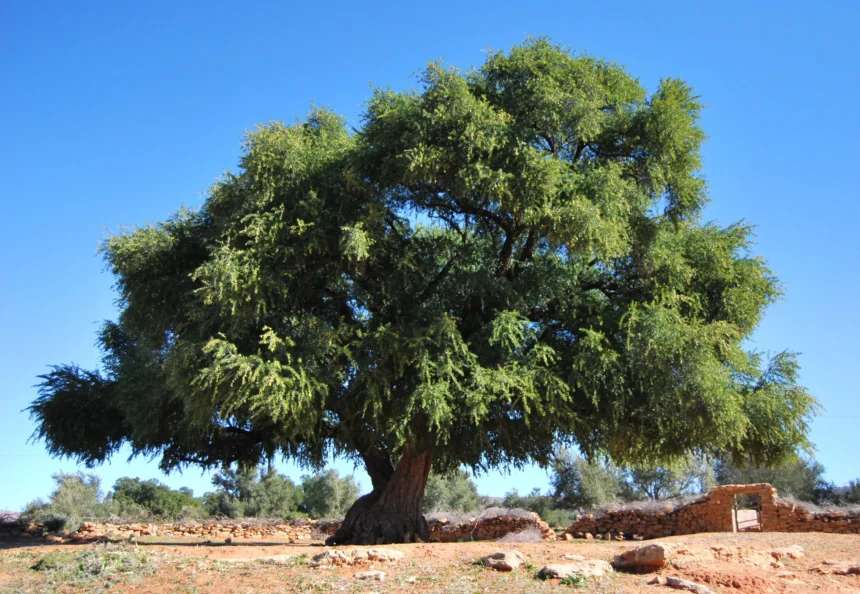
The argan tree (Argania spinosa) is tightly linked to Morocco. Endemic to the southwest, it anchors an ecosystem listed as a UNESCO biosphere reserve. It yields precious argan oil, culinary and cosmetic, and supports local economies through women’s cooperatives
The UN General Assembly proclaimed 10 May as International Argania Day in 2021. To explore the value chain, read the argan journey from tree to your table and discover amlou, a Berber preparation whose three pillars include argan oil
| Tree | Region | Symbolism | Product / use |
|---|---|---|---|
| Sakura | Japan | Fleeting beauty, renewal | Hanami, popular culture |
| Argan tree | Morocco (Souss) | Sustainability, biodiversity, empowerment | Argan oil, amlou, cooperatives |
Why does the argan tree have its own UN International Day?
The UN sought to highlight the tree’s ecological, economic, and cultural weight, an endemic species under pressure, base of a unique ecosystem, and income source for thousands of Moroccan women. The observance encourages sustainable argan forest management and products such as cold-pressed argan oil and artisanal amlou
From trees to terroir products
These trees are more than symbols: they yield resources that shape cuisines. The olive gives olive oil, core to the Mediterranean diet. The argan tree offers a rare hazelnut-noted oil, base of amlou and many Moroccan recipes (see our secrets of beldi traditional oils)
| Tree | Signature product | Link with Taghazit |
|---|---|---|
| Olive | Beldi olive oil | Traditional Moroccan oils |
| Argan tree | Argan oil, amlou | Moroccan delicatessen |
| Hives (local flora) | Pure honey | With amlou and tea |
Protecting these trees protects entire supply chains, artisan skills, and cultural identities. Sustainable tourism around Souss argan forests or Moroccan olive groves raises awareness while supporting communities
Frequently asked questions
- Why do some trees have a UN International Day? To spotlight ecological, economic, and cultural importance and to foster preservation and sustainable management of related ecosystems
- How do trees shape national identity? They become emblems through history, economic role, or beauty, the cedar for Lebanon, sakura for Japan, the argan tree for Morocco
- Can you visit these iconic trees? Yes: Mediterranean olive groves, African baobab parks, cedar forests in Lebanon, sakura gardens in Japan, Souss argan forests, often through sustainable tourism
- Which Moroccan products come from the argan tree? Food and cosmetic argan oil, amlou, and artisan derivatives, available in our Moroccan delicatessen
- How do sakura and argan symbolism differ? Sakura celebrates impermanence and renewal; the argan tree embodies sustainability, ecological resilience, and economic empowerment for Amazigh women
Iconic trees are not mere scenery: they are silent witnesses to history and custodians of cultures. From the olive as peace symbol to the argan tree as sustainability guardian, via the resilient baobab, identity-bearing cedar, and fleeting sakura, each carries part of humanity’s soul
Products from the olive and argan trees
Explore our delicatessen and Moroccan specialties: argan oil, artisanal amlou, and Moroccan terroir treasures