
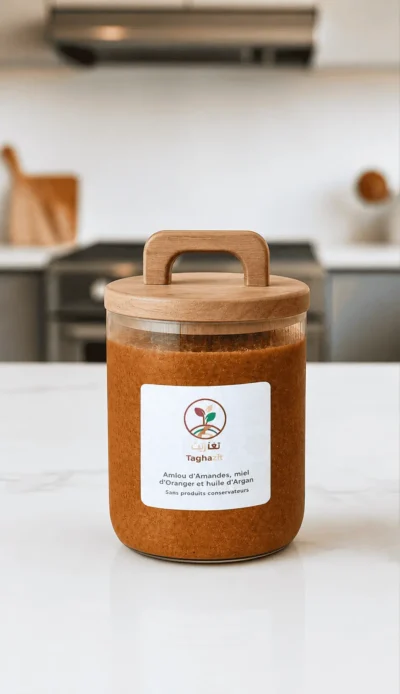
Amlou Benefits: Discover This Healthy and Natural Treasure
Amlou is much more than a spread: it is a Moroccan energy concentrate, often compared to peanut butter for its texture, but significantly richer in nutrients thanks to argan oil and pure honey. If you are wondering about the health benefits of amlou, this article breaks down its composition, nutritional contributions, and the situations where it fits best in everyday life.
Quick answer: Amlou provides unsaturated fatty acids (argan oil), plant proteins (nuts), antioxidants (vitamin E, polyphenols), and natural energy (honey). It supports the cardiovascular system, satiety, and endurance — to be consumed in moderation, like any energy food.
Key takeaways
- 3 ingredients: roasted nuts + culinary argan oil + honey — no added sugar in the traditional recipe.
- Reasonable portion: 1 to 2 tablespoons per day (about 90–110 kcal each).
- Key assets: healthy fats, plant proteins, antioxidants, sustained energy.
- Quality: benefits depend on ingredient purity — artisanal vs industrial amlou.
The unique composition of amlou: a virtuous trio
The nutritional secret of amlou lies in the synergy of three simple components, each providing complementary nutrients.
Roasted nuts: proteins, fiber, and minerals
Amlou is most often prepared with almonds or peanuts, sometimes cashews. Roasted and ground, they provide:
- Plant proteins — essential for muscle maintenance and satiety.
- Dietary fiber — supports transit and slows carbohydrate absorption.
- Magnesium, calcium, iron — key minerals for bones, muscles, and cellular energy.
- Vitamin E (almonds) — antioxidant that protects cell membranes.
Argan oil: liquid gold with healthy fats
The distinctive element of amlou is cold-pressed culinary argan oil. Extracted from argan tree kernels (Argania spinosa), endemic to southwestern Morocco, it concentrates:
- Unsaturated fatty acids (omega-6, omega-9) — associated with a favorable lipid profile.
- Vitamin E and plant sterols — antioxidant action and cardiovascular support.
- Polyphenols — protective compounds against oxidative stress.
The quality of the oil directly conditions amlou’s benefits: diluted or rancid oil cancels part of the nutritional virtues. The full journey from argan tree to your jar is detailed in The Argan Journey: From Tree to Your Table.
Pure honey: natural energy and binding
Honey binds the preparation and brings sweetness without added refined sugar. It contains enzymes, trace elements, and antioxidant compounds. Its glycemic index remains moderate compared to white sugar, especially when combined with the fiber and fats from nuts — which limits sharp glycemic spikes.
| Ingredient | Main nutrient | Associated benefit |
|---|---|---|
| Almonds / peanuts | Proteins, fiber, magnesium | Satiety, muscle maintenance, sustained energy |
| Argan oil | Unsaturated fatty acids, vitamin E | Cardiovascular support, antioxidant protection |
| Honey | Natural carbohydrates, enzymes | Sustained energy, alternative to refined sugar |
Nutritional benefits in detail
Cardiovascular support
The mono and polyunsaturated fatty acids in argan oil help maintain a balanced lipid profile. Combined with antioxidants (vitamin E, polyphenols), they contribute to protecting blood lipids against oxidation — a mechanism involved in arterial health.
Sustained energy, not a sugar rush
Unlike an industrial spread rich in fast sugars, amlou combines carbohydrates (honey), fats (argan), and proteins (nuts). This combination favors a more gradual energy release — useful at breakfast, as a snack, or after exercise. Athletes find particular interest here: see amlou for athletes.
Antioxidants and cellular protection
Vitamin E (argan + almonds), honey polyphenols, and roasted nut compounds: amlou accumulates several antioxidant families. They help the body neutralize free radicals, involved in premature cellular aging.
A healthier alternative to industrial spreads
Compared to Nutella or spreads like El Mordjene, traditional amlou avoids sugar as the first ingredient, palm oil, and emulsifiers. It is a more coherent choice for everyday quality-oriented eating.
| Benefit | Mechanism | Ideal usage context |
|---|---|---|
| Satiety | Proteins + fats + fiber | Snack, bite between meals |
| Endurance | Sustained energy (honey + fats) | Breakfast, before moderate effort |
| Recovery | Carbohydrates + plant proteins | Post-workout (in moderation) |
| Micronutrient intake | Magnesium, vitamin E, iron | Varied diet, meal complement |
Who is amlou particularly suited for?
- Vegetarians: source of plant proteins and healthy fats (contains honey, so not vegan).
- Gluten-free diet: the traditional recipe is naturally gluten-free — check the label for possible traces (see also amlou and gluten-free diet).
- Children (without allergy): excellent energy intake, with moderation and attention to nut allergies.
- Diabetics: moderate consumption possible; honey remains a carbohydrate — medical advice recommended.
- Athletes and students: practical, rich, and tasty snack.
Does amlou make you gain weight?
Amlou is caloric (about 500–550 kcal/100 g), like any product rich in fats and nuts. Consumed in reasonable quantity (1–2 tablespoons), it fits perfectly into a balanced diet. It is excessive portions — not amlou itself — that can tip the caloric balance.
How to integrate amlou into daily life
- Breakfast: toast, baghrir, msemen, porridge.
- Snack: spoon on plain yogurt, sliced apple, or banana.
- Smoothie: amlou + plant milk + banana + cinnamon.
- Homemade baking: cookies, energy balls, brownies.
For culinary ideas with argan oil alone, explore our recipes: 7 recipes beyond salad or 20 ways to enrich your recipes.
Taste quality artisanal amlou
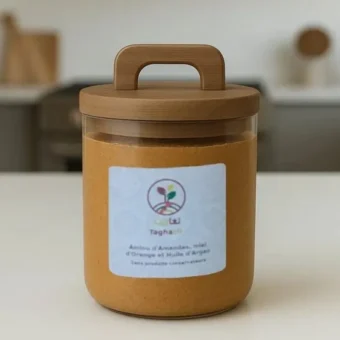
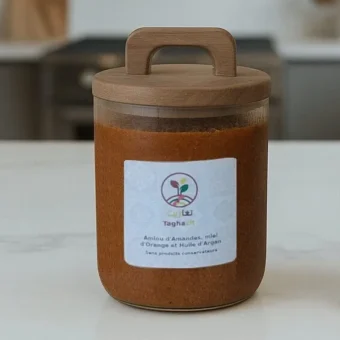
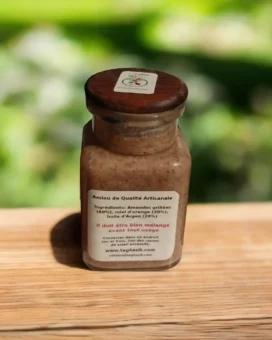
To concretely enjoy these benefits, discover our artisanal amlou — almonds or peanuts, honey, and argan oil.
Frequently asked questions
- Is amlou suitable for vegetarians? Yes. Not for strict vegans because of honey.
- How many calories per portion? About 90–110 kcal per tablespoon (15–20 g).
- Can children eat it? Yes, from the age when nuts are allowed, in small quantity and without known allergy.
- How to choose amlou that keeps all its benefits? Prefer an artisanal 3-ingredient product, ideally organic. Our guide pure honey and amlou: quality and scams helps you avoid bad surprises.
- How to store it to preserve its qualities? Airtight jar, cool and dry place — fridge vs pantry details in our storage guide.
In conclusion, amlou’s benefits rest on a simple recipe and noble ingredients: nuts, argan oil, and honey. Well chosen and consumed in moderation, it is a gourmet ally for energy, satiety, and a more natural diet — far from a sugary industrial spread.
Discover our authentic Moroccan products
Explore our selection of Moroccan delicatessen and specialties: artisanal amlou, argan oils, and treats to enjoy these benefits daily.