
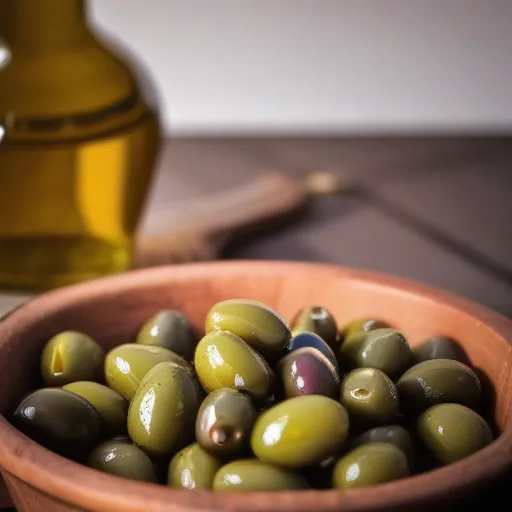
Which Olive Oils You Should Absolutely Avoid When Shopping
The olive oil aisle in supermarkets is full of attractive bottles — golden labels, « extra » claims, sometimes rock-bottom prices. Yet not all that glitters is liquid gold. Identifying oils to avoid protects your health, your budget, and the pleasure on your plate.
Quick answer: Avoid « pure », « light », or « extra light » oils (often refined), abnormally low prices, « EU / non-EU » blends without precise origin, transparent bottles exposed to light, and any oil with a rancid, musty, or metallic taste. Systematically favor extra virgin with clear traceability.
Key takeaways
- Extra virgin: the only category guaranteeing intact polyphenols and aromas.
- Label: origin, harvest date, variety — no vague wording.
- Price: good oil has a real production cost; the « bargain » often hides mediocrity.
- Health: quality oil supports prevention — see olive oil and chronic diseases.
Decoding the legal hierarchy
EU regulation classifies olive oils into strict categories, but marketing plays on words to confuse consumers. Understanding this hierarchy is the first step to avoid being misled.
« Pure », « light », « extra light »: the vocabulary trap
These terms suggest purity or lightness — in reality, they designate refined oils, chemically corrected to mask sensory defects. Refining destroys most polyphenols and antioxidants. Result: a neutral, barely fragrant oil with reduced nutritional benefits.
Lampante virgin: not for raw consumption
Lampante virgin oil has major defects (high acidity, unpleasant taste). Unfit for direct consumption, it is refined then blended with a virgin fraction to produce the « ordinary » olive oil found in supermarkets — far from what you want for seasoning.
| Label wording | Actual process | Avoid for… |
|---|---|---|
| Extra virgin | First cold pressing, no defect | — (optimal choice) |
| « Pure » / « Olive oil » | Refined + 5–15 % virgin | Seasoning, polyphenol intake |
| « Light » / « Extra light » | Refined, filtered, deodorized | Any use where taste and health matter |
| « EU / non-EU blend » | Assembly of various origins | Traceability and consistent quality |
Warning signs at purchase
Price as an indicator
Producing quality extra virgin costs dearly: cultivation, careful harvest, fast pressing, storage, transport. A liter below €5 should raise questions. Investing €15 to €25 per liter guarantees an incomparable taste and nutritional experience — especially if you consume oil raw.
The label: read, compare, walk away
- Avoid: « blend of olive oils from the EU and non-EU », absent origin, missing harvest date.
- Look for: precise country and region, variety (Picholine, Meslala, Arbequina…), harvest date, mill name.
- Bonus: PDO, PGI, or verifiable organic certifications.
Packaging and tasting
Light oxidizes oil: a transparent bottle on a lit shelf is a bad sign. Color guarantees nothing — excellent oil can be golden or intensely green depending on variety. In the mouth, extra virgin announces fruity notes, throat pungency, and sometimes slight bitterness. Avoid rancid, musty, metallic, or flat.
Is green color a quality guarantee?
No. Professionals taste in blue glasses to neutralize visual effect. Golden yellow oil can be excellent; fluorescent green oil can be mediocre. Trust taste, smell, label, and freshness — not color alone.
Fraud and adulteration: a documented market
European and American investigations regularly document oils diluted with sunflower or rapeseed, mislabeled or sold as « extra virgin » without meeting criteria. Consequences: nutritional loss, falsified aromas, unwanted compounds in poor substitutes.
To limit risk: buy from identified producers, cooperatives, or specialist shops. Beldi olive oil, from traceable groves and cold-pressed, offers a transparent alternative to anonymous blends.
| Warning sign | What it often hides | Recommended action |
|---|---|---|
| Very low price per liter | Refined or low-grade blend | Compare with average E.V. market price |
| Transparent plastic bottle | Light exposure, long storage | Choose dark glass or opaque tin |
| No harvest date | Aging oil, falling polyphenols | Favor current-year harvest |
| Rancid taste on opening | Oxidation or poor storage | Do not consume — see our stainless steel storage tips |
Low-grade oil for cooking: yes or no?
Technically, refined oil tolerates high heat better and costs less. But you give up the polyphenols and aromas that justify choosing olive. For occasional frying, a dedicated oil (rapeseed, high-oleic sunflower) may be more suitable. For everything else — seasoning, finishing, slow cooking — invest in trusted extra virgin.
Also keep in mind the limits of olive oil (calories, smoke point) even with an excellent product.
Checklist before buying
Mentally print this list before each purchase:
- Category « extra virgin olive oil » clearly indicated.
- Harvest date from current or previous year.
- Precise geographic origin (country, region, producer).
- Opaque packaging or dark glass.
- Price consistent with extra virgin market.
Frequently asked questions
- Can low-grade oils be used for cooking? Yes, but without the benefits or flavors of extra virgin. For intensive frying, other oils are more stable.
- Is pale oil lower quality? No, color depends on variety and ripeness — not intrinsic quality.
- How long to keep extra virgin? 18 to 24 months after harvest, ideally consumed within 3 to 6 months after opening, away from light and heat.
- How to recognize authentic Moroccan oil? Identified origin (Fès-Meknès, Marrakech-Safi…), « extra virgin », cold pressing. Learn more about beldi olive oil.
- Does organic guarantee quality? Organic label ensures no synthetic pesticides, but does not replace « extra virgin » category or freshness.
Choosing olive oil means protecting your health and eating pleasure. By avoiding misleading names, suspicious prices, and unsuitable packaging, you take the first step toward authentic Mediterranean eating.
Discover our traditional Moroccan oils
Explore our selection of traditional oils: extra virgin beldi olive, traceable and cold-pressed — far from anonymous blends.