
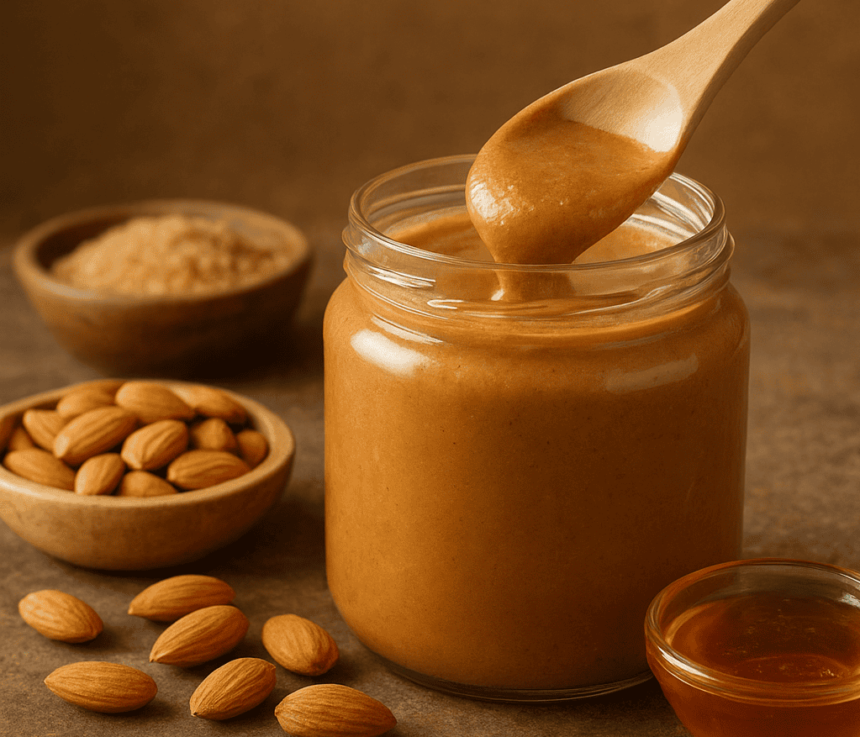
Where to Find Authentic Moroccan Amlou — Your Complete Guide
Looking to buy authentic Moroccan amlou? Between supermarkets, online marketplaces, and specialist shops, options multiply — but not all guarantee the same authenticity. This guide compares purchase channels, explains how to spot quality amlou, and points you to the most reliable sources.
Quick answer: Favor a source transparent about the three ingredients (roasted nuts, culinary argan oil, honey) and Moroccan origin. North African groceries and specialist online shops generally offer better traceability than supermarket « world foods » aisles.
Key takeaways
- Authentic recipe: almonds or peanuts + argan oil + honey — nothing else.
- Caution: added sugar, unspecified vegetable oil, flavorings, emulsifiers.
- Reliable channel: Moroccan specialist or identifiable cooperative.
- Paris: oriental groceries possible, random stock — see dedicated guide.
| Purchase channel | Strengths | Weaknesses |
|---|---|---|
| Supermarket (Carrefour, Leclerc…) | Accessibility, sometimes low price | Limited traceability, mass production, recipe sometimes far from tradition |
| Marketplace (Amazon, etc.) | Wide choice, customer reviews, fast delivery | Imitation risk, misleading photos, hard-to-verify third-party sellers |
| Oriental / North African grocery | Local discovery, affordable price | Irregular stock, sometimes vague label |
| Moroccan specialist shop | Traceability, artisanal quality, advice | Higher price, sometimes online only |
| Direct producer / cooperative | Short chain, support for artisans | Limited volumes, seasonal availability |
What is genuine Moroccan amlou?
Before buying, know how to recognize the authentic product. Amlou is a spread from southwestern Morocco, traditionally made from:
- Roasted, ground nuts — almonds, peanuts, or cashews.
- Culinary argan oil — cold-pressed, extracted from argan tree kernels.
- Natural bee honey — unrefined, binding and sweetening the preparation.
Authentic amlou stands out for its sweet-savory balance, slightly grainy texture, and total absence of additives. For more on composition and organic labeling, see our article on organic artisanal amlou.
Supermarkets and marketplaces: proceed with caution
The « world foods » aisle
Carrefour, Leclerc, or Auchan sometimes offer amlou in ethnic sections. Advantage: accessibility. Limits:
- Industrial production, ingredient ratios optimized for cost rather than quality.
- Argan oil sometimes diluted or replaced with cheap vegetable oils.
- Opaque traceability: almond origin, honey type, producer name rarely indicated.
Amazon and general platforms
Variety is wide, customer reviews useful — but insufficient to guarantee authenticity. Common risks: photos of artisan jars with industrial contents, reseller sellers with no direct link to Morocco, recipes far from tradition. Read the ingredient list, not just the marketing description.
How do you avoid scams and fake amlou?
Verify the label contains only nuts, argan oil, and honey. Beware sugar as the first ingredient, « natural flavor » or vague « vegetable oil » mentions. An abnormally low price for amlou (argan oil is expensive) should alert you. Our guide pure honey and amlou: quality and scams details warning signs.
Oriental groceries and local purchase
North African groceries in your city remain a good lead for discovering amlou. You can see the jar, read the label, and sometimes taste. However, stock is often irregular and quality uneven.
In Paris, several addresses are listed (Jemil Oriental, Épicerie Sabah, Barbès area…) — see our amlou in Paris guide for addresses and practical tips.
Specialist shops: the path of trust
For traceable amlou, shops dedicated to Moroccan artisan products remain the safest choice. What they add:
- Rigorous selection — organic or traditional ingredients, certified culinary argan oil.
- Artisanal production — small batches, respect for ancestral know-how.
- Variants — almond amlou, peanut amlou, sometimes orange blossom honey.
- Cooperative support — direct purchase or via committed importer.
- Transparency — origin, composition, storage advice clearly communicated.
| Quality criterion | What to observe | Warning sign |
|---|---|---|
| Ingredient list | 3 components clearly named | Sugar, vague vegetable oil, flavorings, emulsifiers |
| Texture | Creamy, slightly grainy | Too smooth, too liquid, or too hard |
| Aroma | Roasted nuts + hazelnut note | Rancid or chemical smell |
| Color | Light brown to amber | Discoloration or artificial uniform tint |
| Producer | Identified cooperative or artisan | Generic brand with no origin |
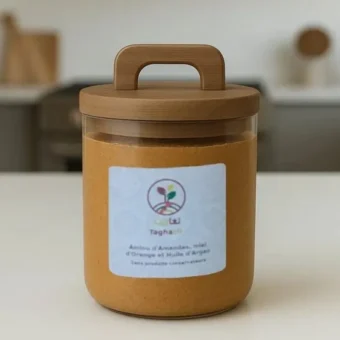
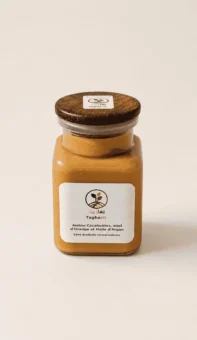
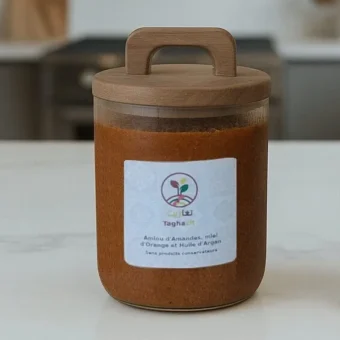
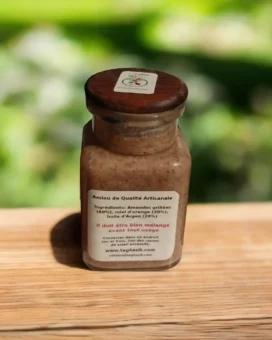
Our artisanal amlou at Taghazit
Ready to order? Here are our four Moroccan amlou references (almonds or peanuts, honey, argan oil) available online.
Frequently asked questions
- How much does good amlou cost? Generally €13 to €35 per jar depending on format (190 g to 500 g) and ingredient quality — argan oil justifies a price above industrial spreads.
- Is amlou good for your health? Yes, when authentic: rich in good fats, proteins, and antioxidants. See amlou benefits for details.
- How do you store amlou after purchase? Airtight jar, cool dry place; fridge or pantry depends on consumption — see our fridge or pantry storage guide.
In conclusion, buying genuine Moroccan amlou means favoring transparency over marketing. Avoid supermarket shortcuts if authenticity matters; turn to specialists who guarantee the traditional recipe and support Souss artisans.
Discover our authentic Moroccan products
Explore our selection of Moroccan delicatessen and specialties: artisanal amlou, argan oils, and Moroccan treats.