
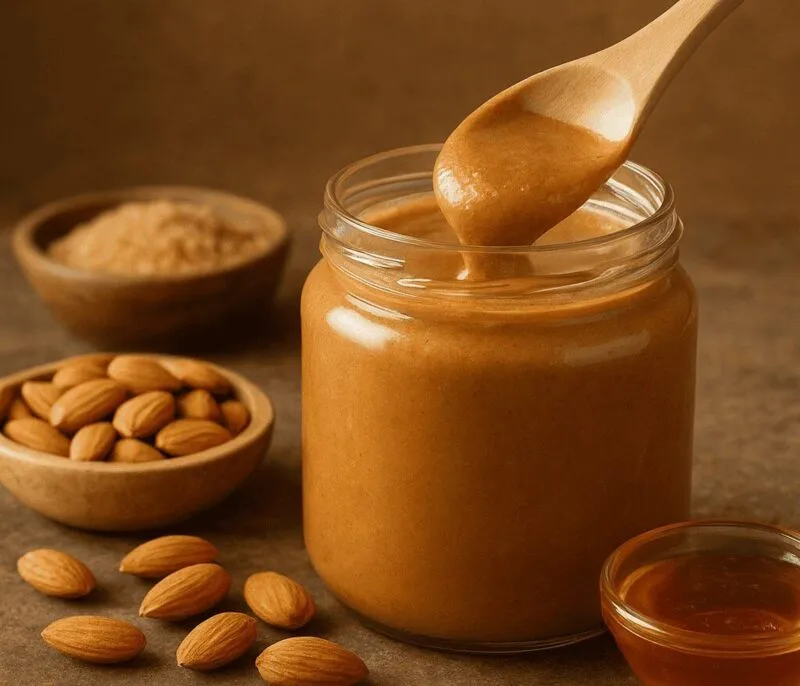
Optimizing your amlou’s preservation: fridge or pantry?
Amlou, Morocco’s exquisite spread, combines rich argan oil, the crunch of almonds (or other nuts), and the sweetness of honey. Made with natural ingredients and no artificial preservatives, mastering its storage is essential to preserve taste and nutrition. Should you keep it in the refrigerator or simply in a cupboard? Understanding each method helps you enjoy your amlou to the fullest.
Quick answer: Amlou can be kept dry in a cool, dark pantry for several weeks, or in the refrigerator to extend freshness for several months. The choice depends on how long you want to store it and on your climate.
Key takeaways
- Pantry: softer texture; consume within 2–3 months; temperate climate.
- Fridge: longer life (often 4–6 months after opening); firmer texture straight from the cold.
- Always: airtight jar, dry spoon, no direct light.
| Criterion | Pantry (room temperature) | Refrigerator |
|---|---|---|
| Indicative life after opening | About 2 to 3 months if the place is cool (18–22 °C) and dry | Often 4 to 6 months (cold slows fat oxidation) |
| Texture when served | Creamy, easy to spread | Firmer; restore softness by taking it out 30 min to 1 h before eating |
| Hot or humid climate | Faster rancidity risk; watch smell and taste | Most reassuring option to stabilize quality |
| Best if… | You finish jars within weeks and like “ready-to-spread” texture | You buy larger sizes or eat more slowly |
How to choose between pantry and fridge without mistakes?
If you finish a jar within a few weeks and the room stays moderately cool, the pantry prioritizes convenience. If you face hot seasons, long gaps between servings, or bulk packs, the refrigerator is the best safety net for aroma and texture.
Understanding amlou’s key ingredients
To grasp the best storage approach, look at each component. Each plays a role in stability and shelf life.
- Argan oil: The main amlou ingredient. Rich in vitamin E and antioxidants, it has good natural stability, which helps limit rancidity.
- Almonds (or peanuts, cashews): Toasted nuts bring texture and flavour. Their fat can oxidize over time, yet argan oil slows that process.
- Honey: A natural preservative thanks to low water activity and antibacterial properties. It supports amlou longevity.
Together these ingredients give amlou a relatively long life. Poor storage can still dull flavour and texture.
| Element | Role in preservation |
|---|---|
| Argan oil | Antioxidant barrier; limits lipid breakdown in nuts |
| Toasted nuts | Body and taste; more oxidation-prone with heat + air |
| Honey | Lowers water activity; curbs microbial growth under normal conditions |
Room-temperature storage: the pantry option
Many people keep amlou at room temperature, which is perfectly possible—some purists even prefer it.
Ideal pantry conditions
- Cool, dry place: A cupboard or pantry with stable temperature, ideally between 18°C and 22°C.
- Away from light: Direct sun or harsh artificial light speeds oil oxidation and dulls flavour.
- Airtight jar: Always use a well-sealed glass jar to limit air and odour pickup.
Under these conditions amlou keeps easily for 2 to 3 months, often longer. Stir before each use—oil rising and solids settling is normal.
Pros and cons
The main pantry benefit is a fluid, easy-to-spread texture. Amlou stays creamy and aromatic at room temperature. The downside is slightly shorter life versus refrigeration, especially in warm climates.
Refrigerator storage: extended freshness
To prolong shelf life after opening—or if you live in a hot region—the refrigerator is an excellent option.
Keeping amlou cold
Cold strongly slows fat oxidation and bacterial growth, adding protection. In the fridge amlou often keeps 4 to 6 months or more.
Texture changes and tips
The main cold effect is firming. Argan oil and almond fats solidify, making amlou denser and harder to spread.
- Plan ahead: Take amlou out 30 minutes to 1 hour before serving so it softens.
- Stir well: At room temperature, mix vigorously with a clean dry spoon to homogenize.
- Avoid thermal shocks: Repeated swings from very cold to very hot can harm quality.
How to tell if your amlou is still good
Even with good storage, know the signs of spoilage.
| Indicator | Reassuring sign | Warning sign |
|---|---|---|
| Smell | Gentle hazelnut note typical of fresh argan oil | Rancid, sour, or “old fat” odour |
| Taste | Sweet-savoury balance | Strong bitterness or sharpness |
| Sight | Oil/solid separation fixed by stirring | Heavy discoloration or abnormal moisture |
- Smell: Rancid, sour, or “old fat” notes mean amlou is past its best. Fresh argan oil smells lightly of hazelnut.
- Taste: Bitter or sharp flavours suggest oxidized fats.
- Appearance: Unusual colour or mould (rare with proper storage) are red flags.
When in doubt, skip eating to avoid discomfort.
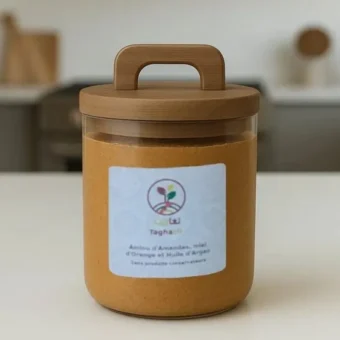
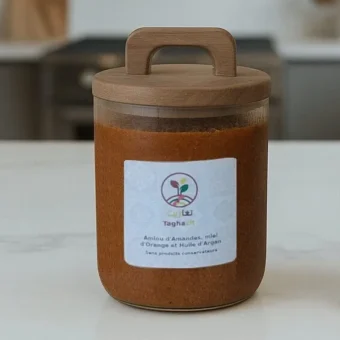
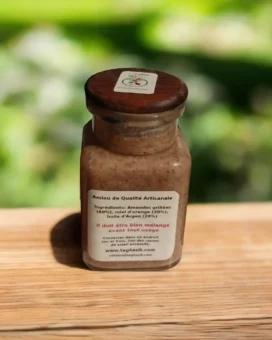
Our artisanal amlou at Taghazit
To apply these tips to a quality spread (almonds or peanuts, honey, argan oil), here are the four amlou references we sell online—same cards as the shop, no Elementor: image, title, price, and add to cart.
Frequently asked questions
- Does amlou solidify in the cold? Yes—fridge temperatures firm fats from argan oil and nuts, but texture returns at room temperature.
- How to remix separated amlou? Use a clean dry spoon and stir vigorously from bottom to top until smooth. Separation is natural.
- Can I freeze amlou? Technically possible, but freezing is usually not recommended—it can alter texture and subtle aromas after thawing.
In short, the best amlou storage matches your pace. For quick use, the pantry is ideal. For longer keeping or hot environments, the refrigerator wins—with a little planning to restore the perfect texture. Whatever you choose, an airtight jar and darkness are the keys to enjoying this Moroccan treasure.
Discover our authentic Moroccan products
Browse our delicatessen and Moroccan specialties: oils, amlou, spices, and sweets to complete your basket.