
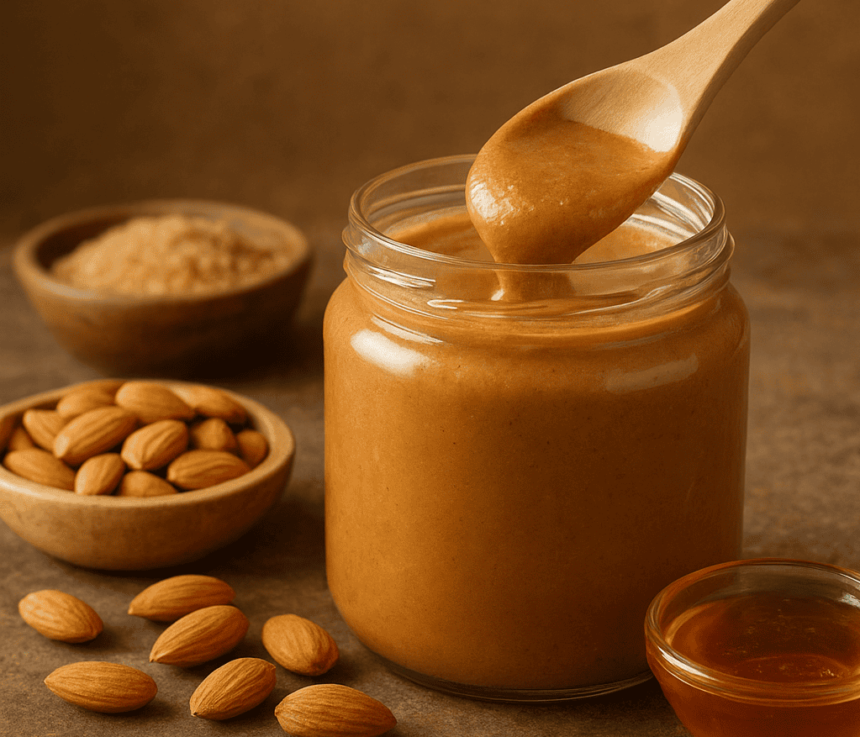
Organic Artisanal Amlou: The Authentic and Healthy Moroccan Spread
Immerse yourself in the flavors of Morocco with organic artisanal amlou, a spread made from carefully selected natural ingredients. This culinary treasure, originating from the Souss and Anti-Atlas regions, combines the creaminess of organic argan oil, the crunch of roasted almonds, and the sweetness of pure honey — for a unique, authentic taste experience that respects your health.
Quick answer: Organic artisanal amlou brings together three noble ingredients (organic argan oil, roasted nuts, honey), sourced from organic farming and prepared in small batches according to ancestral Berber know-how. It is a natural alternative to industrial spreads, richer in nutrients and free of additives.
Key takeaways
- Short recipe: organic argan oil + almonds (or peanuts) + honey — no superfluous ingredients.
- Organic label: traceability of raw materials, no synthetic pesticides or GMOs.
- Artisanal production: slow roasting, stone grinding, manual mixing — no emulsifiers.
- Moroccan origin: emblematic product of the Souss, linked to the argan tree and local cooperatives.
| Criterion | Organic artisanal amlou | Industrial spread |
|---|---|---|
| Composition | 3 identifiable ingredients, verifiable organic label | Sugar, mixed oils, lecithin, flavors, sometimes hazelnuts in low proportion |
| Texture | Creamy, slightly grainy, roasted aromas preserved | Smooth and homogeneous thanks to emulsifiers |
| Nutritional profile | Unsaturated fatty acids, vitamin E, plant proteins, natural honey | High added sugar content, sometimes hydrogenated or palm fats |
| Production | Small batches, traditional Moroccan craftsmanship | Mass production, industrial standardization |
| Impact | Support for cooperatives and the argan tree (UNESCO) | Global supply chain, little territorial connection |
What distinguishes “organic” amlou from “artisanal” amlou?
The organic label guarantees that the argan oil, nuts, and honey come from certified organic farming. The term artisanal describes the method: small volumes, traditional roasting and grinding, without industrial standardization processes. The best amlou combines both: organic raw materials processed according to the ancestral know-how of southern Moroccan cooperatives.
Discovering the Secrets of Organic Amlou
Organic amlou stands out for its exceptional quality, the result of know-how passed down from generation to generation in southwestern Morocco. Once reserved for celebrations and convivial breakfasts — served with warm bread, mint tea, or pancakes (msemen, baghrir) — it is now appreciated well beyond the borders of the Maghreb.
Unlike industrial versions, organic artisanal amlou guarantees the use of raw, whole ingredients. Organic culinary argan oil, extracted from the kernels of the argan tree (Argania spinosa), forms the lipid base and aromatic signature of the product. Almonds (or other nuts) provide body and crunch after roasting. Pure honey, chosen for its quality and fluidity, binds everything together and sweetens the preparation.
Artisanal production allows rigorous control at every stage — kernel selection, roasting, stone grinding, gradual incorporation of oil and honey — preserving the aromas and nutritional benefits of each component.
The Steps of Artisanal Production
Understanding how organic amlou is prepared helps measure the difference from a standardized industrial product.
- Selection of raw materials: Cold-pressed organic argan kernels, hand-sorted almonds or peanuts, unpasteurized local honey.
- Roasting: Nuts are slowly grilled to develop their caramelized aromas, without burning the oils they contain.
- Grinding: The traditional stone mill (or slow grinding) transforms the nuts into a thick paste, releasing their natural oils.
- Incorporation: Organic argan oil and honey are added gradually, mixing by hand until a creamy, homogeneous texture is achieved.
- Jarring: Immediate packaging in airtight jars, without artificial stabilizers or preservatives.
| Step | What the artisan controls | Effect on the final product |
|---|---|---|
| Roasting | Temperature and grilling duration | Caramelized notes, controlled bitterness |
| Grinding | Fineness of the nut paste | Grainy or smoother texture depending on the technique |
| Oil / honey ratio | Proportions adapted to the chosen nut | Sweet-savory balance, creaminess |
| Packaging | Absence of air, clean and dry jar | Freshness preserved from the moment of jarring |
Almonds, Peanuts, or Walnuts: Which Variant to Choose?
The base recipe remains the same; only the nut changes. Each variant offers a distinct flavor profile, suited to different uses.
| Variant | Flavor profile | Ideal for… |
|---|---|---|
| Almonds | Mild, refined, delicate hazelnut notes | Breakfast, toast, fine pastry |
| Peanuts | More intense, slightly salty, very fragrant | Energy snack, smoothies, indulgent recipes |
| Cashews | Creamy, subtle, less sweet on the palate | Bowls, yogurt, sweet-savory pairings |
| Walnuts | Woody, deep, more pronounced aromas | Plain tasting, cheese accompaniment |
The Health Benefits of Organic Amlou
Beyond its exquisite taste, organic amlou offers many advantages for a healthy and balanced diet. Like any energy-dense product, it should be enjoyed in moderation — one to two tablespoons per day is enough to benefit from it.
- Source of antioxidants: Organic argan oil is recognized for its high antioxidant content (vitamin E, polyphenols), contributing to protecting cells against oxidative stress.
- Rich in essential fatty acids: Argan oil provides unsaturated fatty acids beneficial for the cardiovascular system.
- Plant protein intake: Almonds and other nuts are an excellent source of plant proteins, essential for growth and tissue maintenance.
- Natural energy: Honey provides a natural and sustained energy supply, without the blood sugar spikes of refined sugars.
- No additives: No emulsifiers, colorants, or synthetic flavors — a clear and readable composition on the label.
| Nutrient | Main source in amlou | Dietary interest |
|---|---|---|
| Vitamin E | Organic argan oil | Antioxidant action, cellular protection |
| Unsaturated fatty acids | Organic argan oil | Cardiovascular system support |
| Plant proteins | Almonds, peanuts, or walnuts | Muscle maintenance, satiety |
| Natural carbohydrates | Pure honey | Gradual energy, alternative to refined sugar |
| Fiber and minerals | Roasted nuts | Magnesium, calcium, digestive transit |
Practical Tips for Choosing Your Organic Amlou
The amlou market has expanded: here is how to spot an authentic, organic, quality product.
Choosing quality amlou
- Favor certified organic products, guaranteeing ingredient traceability and compliance with environmental standards.
- Check the composition: it should contain only organic argan oil, nuts, and honey — nothing else.
- Opt for local small producers or Moroccan cooperatives to support the local economy and ensure optimal freshness.
- Be wary of textures that are too smooth and uniform: they may indicate the presence of industrial emulsifiers.
Storing your organic amlou after opening
Without preservation additives, organic amlou requires a few precautions once the jar is opened: airtight container, cool and dry place, clean spoon at each use. Pantry or refrigerator? The answer depends on your consumption rate and climate — our article Optimizing your amlou’s preservation: fridge or pantry? details the comparison, indicative durations, and signs that a jar has turned.
Reading the label at a glance
| Element to check | Good sign | Warning signal |
|---|---|---|
| Ingredient list | 3 components maximum, all clearly named | Added sugar, vague “vegetable oil,” flavors |
| Certification | AB logo, Ecocert, or equivalent with number | “Natural” or “premium” mention without label |
| Origin | Morocco, Souss-Massa or Anti-Atlas region | Origin not indicated or “blend of origins” |
| Producer | Cooperative, identified artisan, visible contact | Generic brand without traceability |
Everyday Gourmet Ideas
Organic artisanal amlou can be enjoyed well beyond a simple spread. Here are original ways to incorporate it into your cooking.
- Moroccan breakfast: Spread on whole-grain bread, baghrir, or msemen; serve with mint tea.
- Energy bowl: A spoonful on plain yogurt, fresh figs, and a pinch of cinnamon.
- Homemade pastry: Cookies, energy balls, or brownies — amlou partially replaces butter and sugar.
- Comfort smoothie: Honey-amlou, banana, almond milk, and a pinch of ginger.
- Sweet-savory touch: A drizzle of diluted amlou on a quinoa salad or roasted carrots.
Is organic amlou suitable for vegetarian or vegan diets?
Traditional amlou (argan oil, nuts, honey) is perfectly suited for vegetarians. However, it is not vegan due to the honey. Some homemade recipes substitute honey with agave or date syrup, but the authentic Moroccan version always relies on pure honey.
A Product Rooted in a Territory and Know-How
Choosing organic artisanal amlou also means supporting a unique ecosystem. The argan tree, endemic to southwestern Morocco, is classified as UNESCO World Heritage. The women’s cooperatives that perpetuate argan oil extraction and amlou preparation contribute to preserving this tree and the economic autonomy of local communities.
Organic farming strengthens this commitment: no synthetic pesticides on almond or argan trees, respect for soils, and fairer compensation for producers. Each jar of organic artisanal amlou is thus the fruit of a short, transparent, and environmentally respectful value chain.
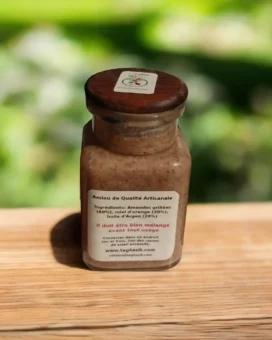
Our artisanal amlou at Taghazit
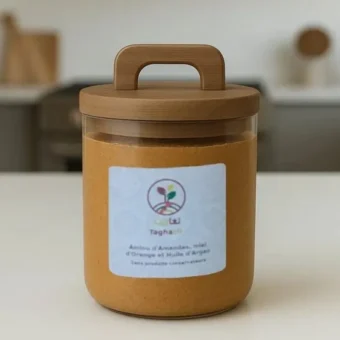
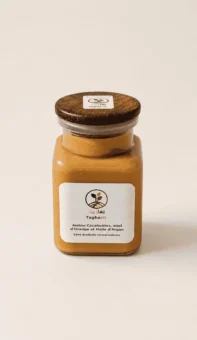
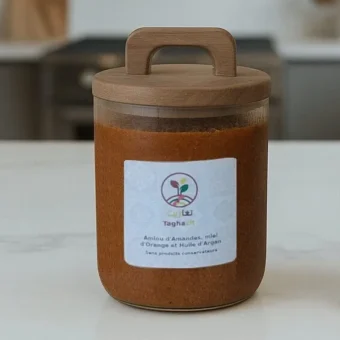
To discover an authentic organic amlou (almonds or peanuts, honey, argan oil), here are our four references available online.
Frequently asked questions
- Why does organic amlou cost more than a classic spread? Organic argan oil is rare and precious (a tree produces few kernels), production is manual, and volumes remain limited. The price reflects the quality of raw materials and artisanal work.
- Can you make organic amlou yourself? Yes, with good organic argan oil, roasted almonds, and quality honey. You need a powerful blender or stone mill, and adjust proportions gradually until the desired texture is reached.
- What is the difference between almond amlou and peanut amlou? The recipe is identical; only the nut changes. Peanut amlou is more intense and slightly salty; almond amlou remains milder and more refined.
- Can people with diabetes consume it? Amlou contains honey (natural carbohydrates). Moderate consumption can fit into a balanced diet, but personalized medical advice is recommended.
- How many calories in a serving? Approximately 90 to 110 kcal per tablespoon (15–20 g), depending on the proportion of honey and nuts.
In summary, organic artisanal amlou is much more than a simple spread: it is a taste experience that transports you to the heart of Morocco, while offering a healthy and balanced diet. Discover the authentic flavors of this wonderful preparation and treat your palate to a true sensory journey.
Discover our authentic Moroccan products
Explore our selection of fine food and Moroccan specialties: organic amlou, argan oils, spices, and sweets to complete your basket.